


Solid Recovered Fuel (SRF)
The business of the PENA Group is the operation and development of high-performance tools for the recycling of wastes. Our installations embody a long-term vision of an urban and social ecology.
The Pena Group is delivering a solution to the French Energy Transition Law, which promotes the consumption of solid recovered fuel and minimizes the quantity of landfill wastes in final waste disposal facilities.
Quality of equipment (in partnership with manufacturers)
PENA expertise in fuel production
Long-term production streams
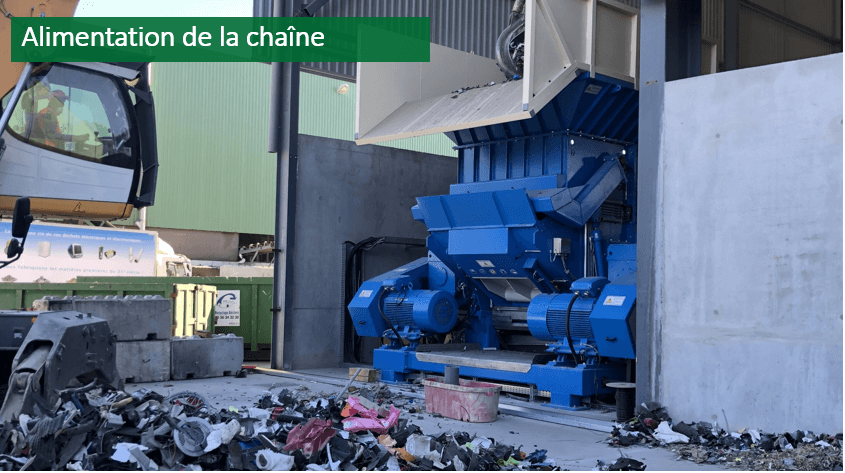
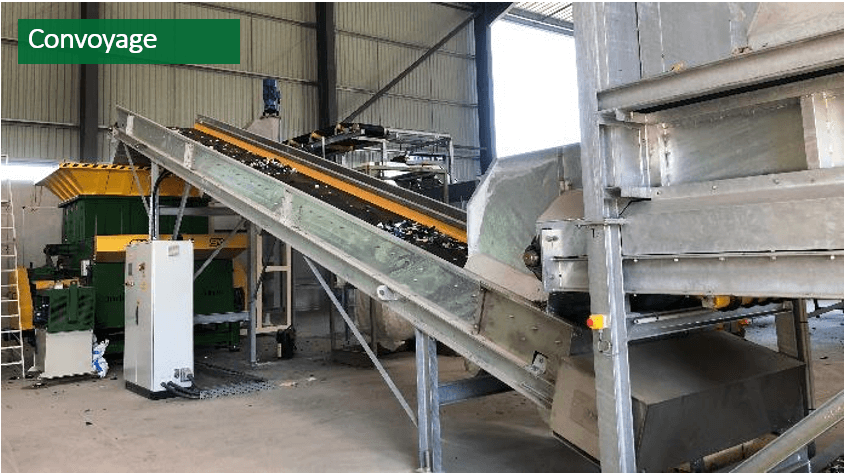
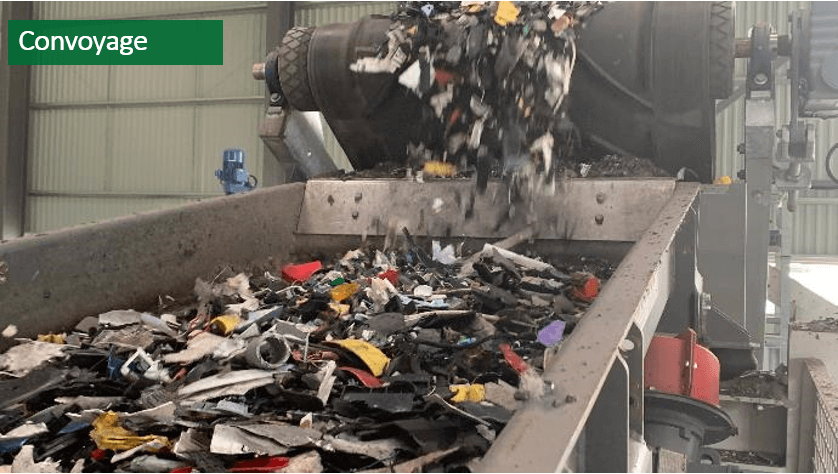
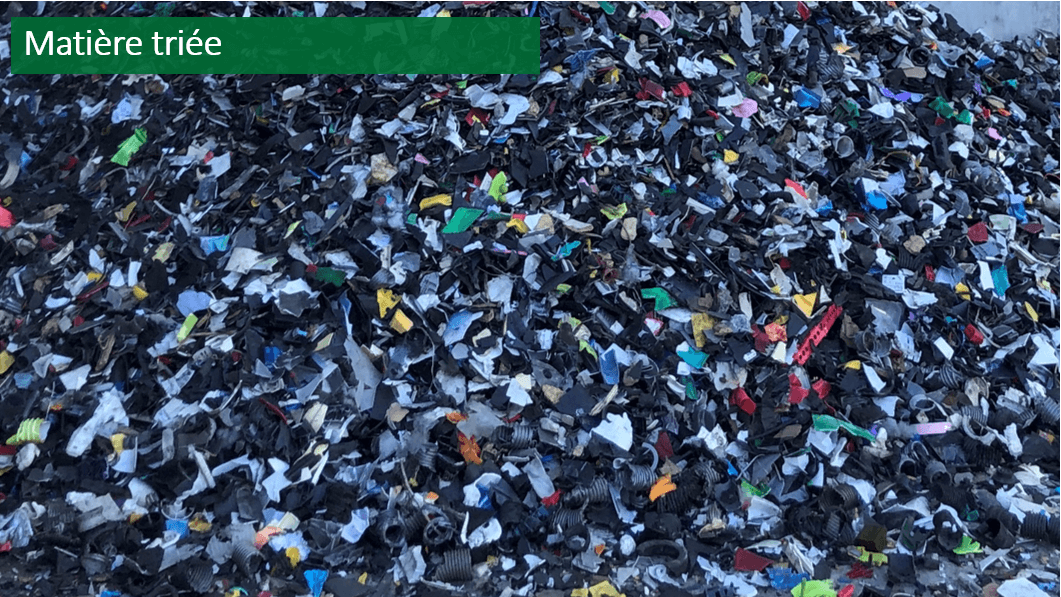
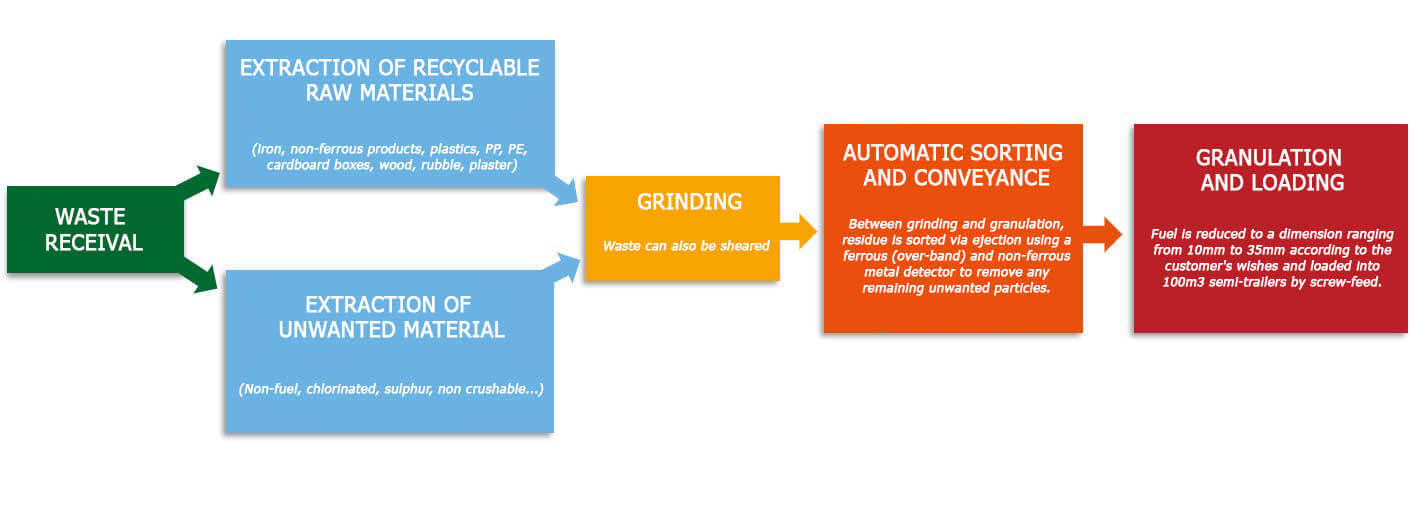
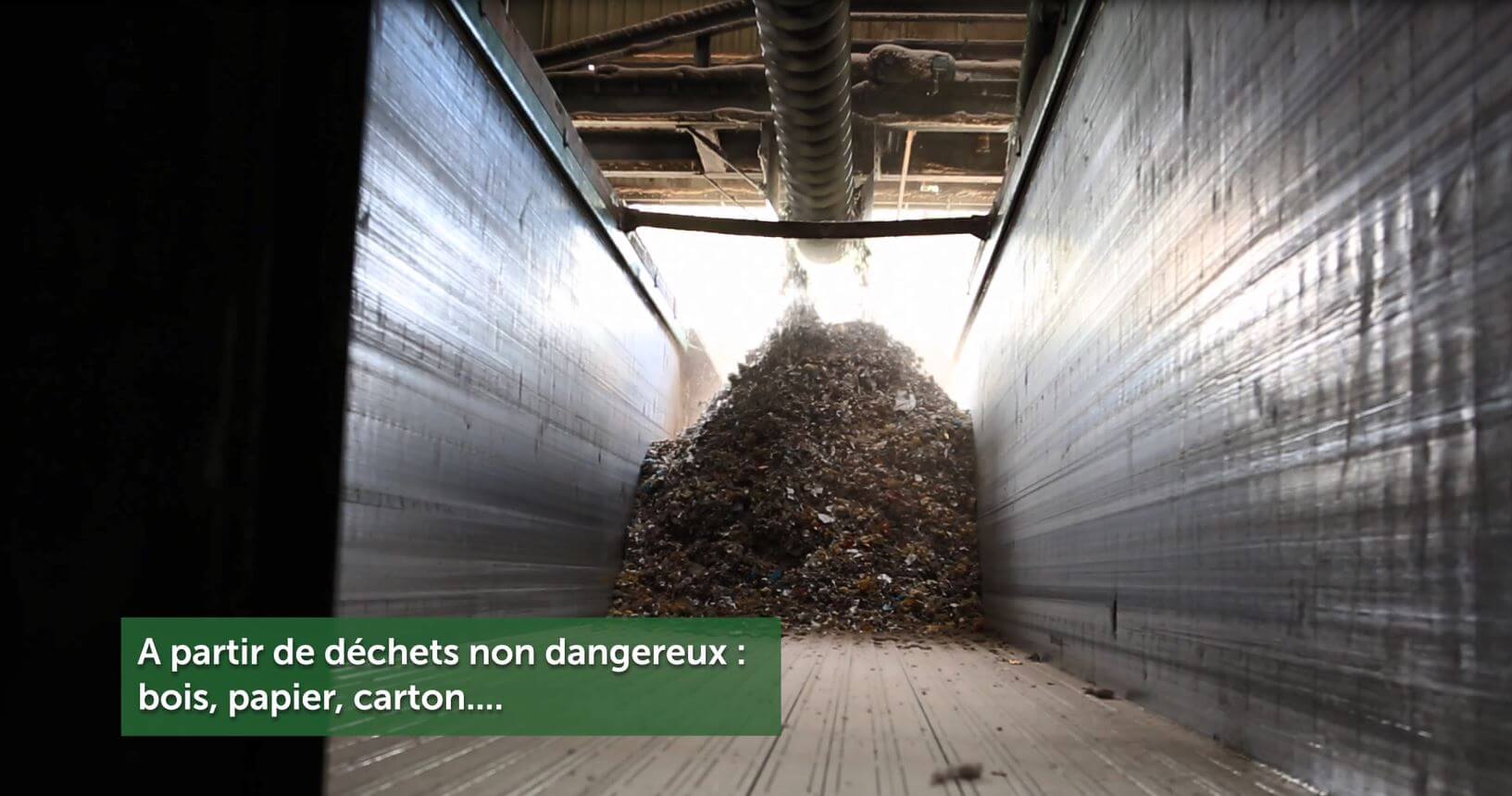
Stages in the SRF production process
THE BENEFITS OF SRF
♦
COMPLETE DESTRUCTION OF WASTE
using high-temperature furnaces for long durations
♦
NO FORMATION OF DIOXINS OR FURANS
due to the specific temperature profile
♦
NO RESIDUE REQUIRING LANDFILL
ash is integrated into the final product (cement)
♦
REDUCTION OF GREENHOUSE GAS EMISSIONS
SRF is used to replace fossil fuels
♦
PRESERVATION OF FOSSIL FUELS
non-renewable natural resources
♦
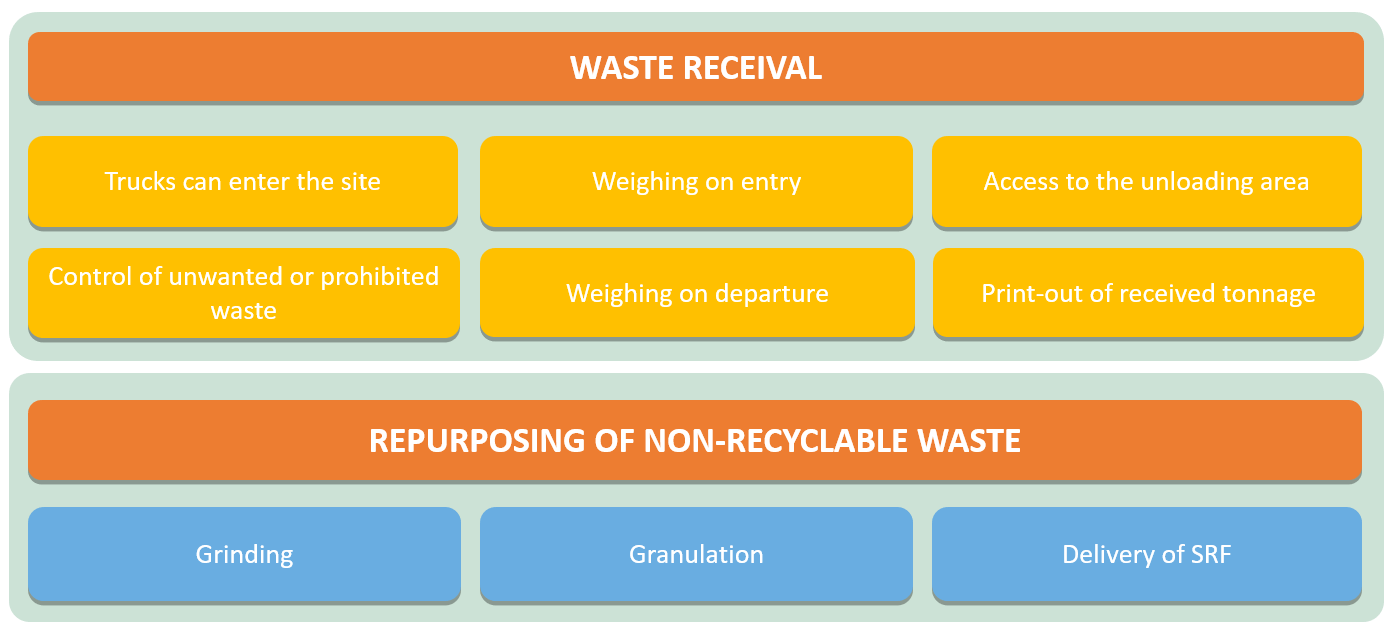
Summary of operations
- Opening of the first CORIS SRF production line in France in 2005
- 2018: investments in the production line for the tripling of productivity to 15 tonnes per hour
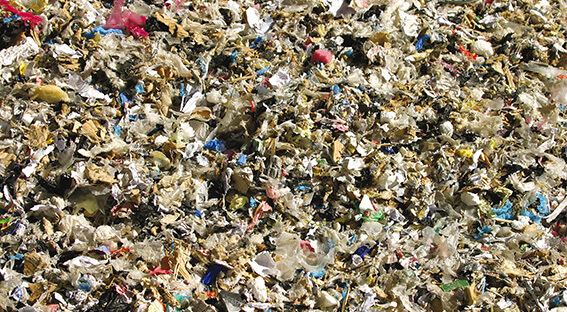

System for the recycling of industrial and agricultural plastics
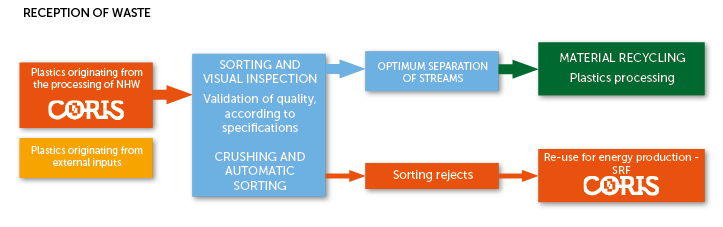
The Pena Group continues to pursue its objective for the (technical and economic) maximization of recycling, particularly the recycling of soiled plastics or mixed post-consumer plastics.